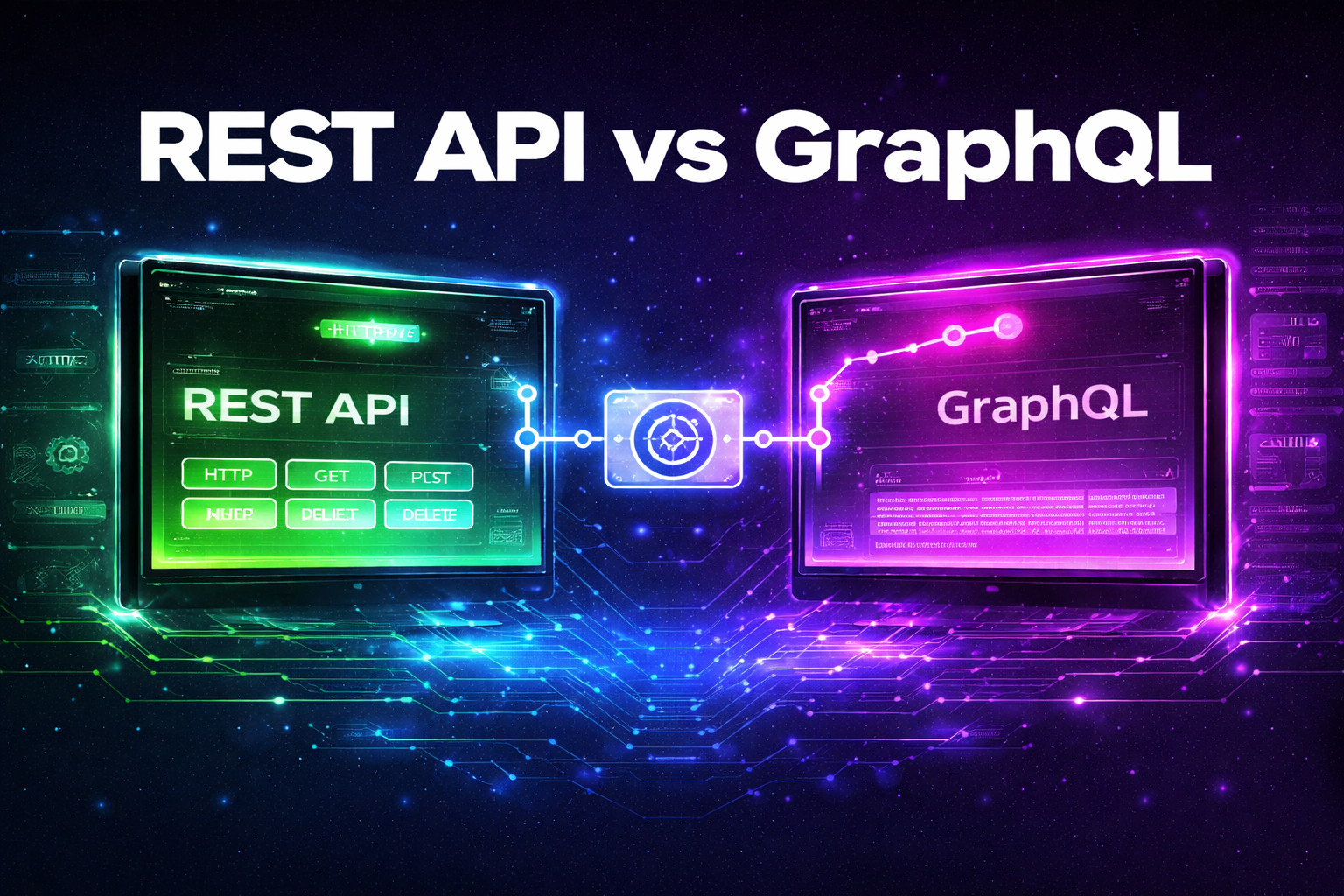
APIs act as the backbone of modern web applications. REST has long been the industry standard for building scalable web services. However, as applications became more complex, developers began facing issues such as over-fetching and under-fetching of data. GraphQL was introduced to solve these problems by allowing clients to request exactly the data they need.
Performance considerations
While REST APIs are simple and easy to cache, GraphQL offers more flexibility in data fetching. However, GraphQL requires careful schema design and security implementation.
Technology choices should be driven by system requirements, not trends.
Ankit Singh
REST APIs
Standard HTTP based architecture using GET, POST, PUT and DELETE.
GraphQL
Flexible query-based API architecture introduced by Facebook.
gRPC
High-performance RPC framework used for microservices.
WebSockets
Real-time communication protocol used for live applications.
Developers should evaluate scalability, security, and system complexity before choosing an API architecture.